Everyday Life, Reading

Your Kids Have a Crush On You

“Where’s Mommy?”

“Where’d Daddy go?”

These are questions my two-year-old son asks at least once an hour.  He and his four-year-old sister have a Mommy and Daddy Radar. It beeps urgently when they realize they don’t know exactly where Mommy and Daddy are. If you have children, you know what I’m talking about. And you definitely know what I’m talking about if this scenario sounds familiar: It’s 4:30 in the afternoon, during the witching hours of the day.  You’re more than ready for a break, but really, your work has just begun. There’s dinner to cook, dishes to wash, and kids to bathe and put to bed and try your best to keep in bed until they finally, finally succumb to sleep. And then you have a few more miles to go in the form of piles of laundry or work you didn’t quite wrap up at the office, or maybe a phone call to return that you’ve been dreading all day. Not to mention that workout you had to put off all day/week. No, if you’re a mom or dad, 4:30 isn’t even close to quitting time.

Around 4:30 is when I desperately think, “I just need five minutes alone.” So I creep to the bathroom. And I’m in there about ten, maybe twenty seconds before I hear “Where’d Mommy go? Mommy!!”

I’m in here. Hiding.

4:30 is also about when my children get desperate for me to read books to them. “I wan’ read a boooook!” my always enthusiastic son proclaims, as he lugs a book beyond his age level to me when I walk into his room to see, again, why he’s yelling for me. Quiet, dancing Ella then says, “I want to read, too,” and I’m left with no choice, because how can I put silly things like sustenance and cleanliness ahead of the love of reading I and my children share? So we smush together on the couch and open up a book and let the rice boil over while we read about brave knights or dancing princesses. And I struggle to explain why the rice is dry again, but my husband doesn’t even ask why, because he knows. He knows how our children hit me at my weak spot and get me to hold to hold them in my lap when I think I need to be doing other things. He knows that frustration between wanting to say “yes” but always feeling guilty about whatever it is you said “no” to. He and I both struggle to figure out our “yes’s” and our “no’s”. Maybe you do to.

My kids aren’t trying to frustrate me, but I get weary of how unsettled they become when I’m focusing on something other than them. I can’t get mad at them (okay, I can, but I shouldn’t) because the truth is they want me to be present with them because they’re crazy about me. Me. The woman wearing the sweat pants that likely have snot (theirs) on them. The woman who really should’ve washed her hair this morning and who feels a little boring around other adults and who can’t remember to change the oven from “broil” to “bake” and serves her family crunchy cookies. The woman who forgets at least one thing on her grocery list every stinkin’ shopping trip. The woman who sometimes (often) loses her cool and speaks in harsh tones when she’s upset and clearly never, ever has it all together. That’s the woman they’re crazy about.

That’s why they act like a seventh grader with crush on someone. Remember those days? (Don’t pretend you weren’t like that!) You craved that person’s attention. You were envious of the people your crush talked to when he or she wasn’t with you. You performed crazy, nonsensical antics to get his/her attention. You thought about where they were when they were not around (yes, you did). You hoped the person would see past your imperfections and fall completely in love with everything about you that is good and unique and found nowhere else on earth but in you. Really, don’t we all still want that from the people we love? Isn’t that what our kids want from us? Here we are with our kids constantly wanting our attention, acting out when we’re trying to talk on the phone, and driving us crazy when all we want to do is get the dishes washed or the bills paid…and all they want is to simply be with us. Whether we’re having a bad hair/face/work/everything day or not. Yes, it’s true. Your kids have a huge crush on you.

And in all the books, movies, love songs, and all other forms of human expression, what’s sadder than unrequited love?

But of course, we all love our kids, more deeply than we can say. Our children’s love is not unrequited. I know there are parents out there who aren’t very loving, but I personally don’t know any. The parents I know are too crazy about their children to put it into words. But no matter how much I love my children, I’m going to get frustrated. I’m going to be tired of being needed. I may mess up and make them feel like I don’t appreciate their desire to be with me. But it helps to remember why they’re constantly seeking me out. It helps to remember it’s because they love me and they know I love and care for their every need. And though I tell my kids “I love you,” if I want them to believe me, I need to meet their love at the only place they know how to give and receive it–in spending time together. I need to gather them in my arms and laugh at their silly jokes. I need to read books and go with them on their flights of imagination. I need to make sure they know I love every single thing about them: the questions my four-year-old daughter asks, the exuberance my toddler son maintains every single day, the colors in their eyes and hair and skin, the absolute freedom they feel to snuggle with me no matter what. There are no barriers between us now, and I need to realize it’s not always going to be that way. Someday, I’m going to call out, “Hey, let’s read this book!” and I’ll get a groan for a response, or no response at all.  But for now, reading a book together is exactly the excuse they’re looking for to be near me. So I’m going to revel in the crush they have on me and I on them. There will always be days when I feel like reading by myself instead of gathering them up in my arms and reading Farmer John’s Tractor for the eighteenth time. Still, I hope to remember how much my arms and my attention mean to them, and I’ll try not to hide from them. At least not until after bedtime.

Communicating unconditional love through the sacrifice of time is my goal. Yes, I’m setting myself up for failure. But trying is still accomplishing goals as long as you’re still trying the next day. It just may mean those goals will take a lifetime.

God bless all of you on this Father’s Day. I hope you get the chance to spend lots of time with your loved ones and maybe even a little time to yourself. And be sure to tell the children in your life that yes, you will read them that book. =)
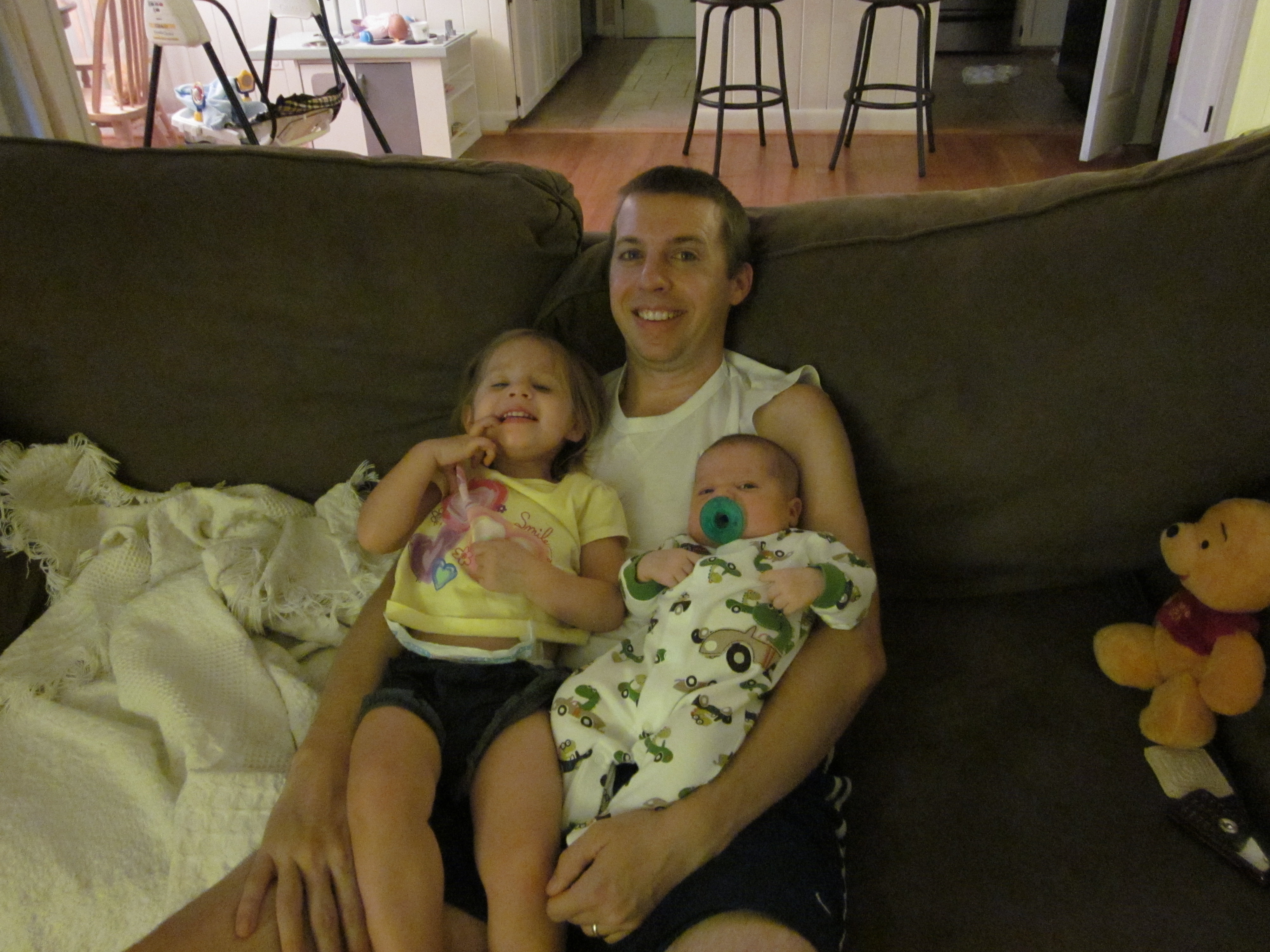
IMG_0247

Reading

Winter is for reading. But here’s my Summer Reading List.

I realized today that though I write a book blog, I am remiss in that I have not posted my summer reading list. My excuse is that I don’t have a reason in this era of my life to view summer as any different from other seasons when it comes to reading. In fact, if I had to pick a season during which I spend the most time reading, it would definitely be winter. I despise cold weather, and we had a particularly wet winter this past year. I loathed it, but I did get a lot of reading in. However, I love all the ideas floating around about what one should read during the summer. Some readers use the summer months to take a break from deep thinking and pick up lighter fiction. Some readers use the extra time to really dig deep into some breathtakingly impressive classic by Trollope like The  Way We Live Now. I don’t really have a summer reading philosophy, except to read what I think I’ll love reading. I also read, and sometimes even enjoy, a few non-fiction books in the summer because I do actually care about shaping my mind and character and all that.

So here’s what’s on my  list:

Redfield Farm: A Novel of the Underground RailroadRedfield Farm: A Novel of the Underground Railroad – The rave reviews of this book are killing me because I want to read it so badly but none of my local libraries even have it on order. I’ll have to break down and buy it.

The Wednesday Sisters – Books about writers always intrigue me.

Islanders – As I wrote in this post about Helen Hull’s Heat Lightning, I would like to read everything by Hull now that I’ve gotten started. One of my readers said I would probably like Islanders so I’m hoping to get a hold of it in the next few weeks.

The Light Between Oceans – Some of my favorite bloggers have really enjoyed this book, so I’m looking forward to The Light Between Oceansfinding out what all the love is about. The plot sounds kind of like a short story by L.M. Montgomery I read a long time ago. So it has that going for it.

The Princess and the Goblin – I’ve never read anything by George MacDonald, but I have read a lot by C.S. Lewis and the fact that MacDonald had a huge impact on Lewis is enough for me to know that I need to read at least some of his work. I’ve been told to start with The Princess and the Goblin but if you have other advice, please let me know!

Educating the Wholehearted Child – I am a little unsure of what a “wholehearted” child is but it sounds like a noble goal and I love Sally Clarkson’s book The Mission of Motherhood. I’m pretty sure we’ll be starting some homeschooling this fall with Ella, my four-year-old, so I think it’s important to start thinking through some long term goals for my children’s education.

The Hiding Place – I realized this year that I read an abridged version of this as a child but I haven’t ever read the real thing. With my recent and unintentional literary focus on WWII, I would be a terrible former history minor if I didn’t read this book, too. Also, the copy of the book we have is signed by the author. Trust me, I don’t have many books signed by the author.

The Homecoming of Samuel Lake – I don’t always love Southern Literature, even though I’ve lived here all my life. But that doesn’t The Homecoming of Samuel Lakereally mean anything–who can say they love all of a certain genre? I picked this book up at the library last week and read a few pages and I think it has potential. I hate how often reviewers of Southern Lit books say something along the lines of “Fans of  To Kill a Mockingbird will love this book,” because that seems like some kind of literary heresy, but I have to admit that statements like that do get my attention.

And that’s pretty much my list for the next few months. I will definitely read other books that are not on this list and I will probably not finish all of these books. Reading lists are more like guidelines in my world right now. Also,  I’m a quitter when it comes to reading for pleasure. If I don’t like it or can’t find some good reason for finishing a book, I simply don’t finish it. There is not enough time in the world to read bad books. Or even good books that I don’t like. But I like having  a list and I like seeing other people’s reading lists, too. So what’s on your list this summer?

Reading, Reviews

The Secret Keeper

The Secret KeeperI finished The Secret Keeper and now I would like to pick it up and read it again, cover to cover, in one sitting.  Kate Morton not only paints pictures with her words, she pulls you into the room with her characters and even pulls you into the characters themselves. At least that’s what happened to me while I read this book. There’s one scene in particular set in London during the blitz that I really do think made me feel the floor of the crumbling boarding house shake. You must read this book.  I think it’s Morton’s best work yet.

I’m not sure how to summarize the book; it’s so hard to give any details without giving this twisty plot away. The novel is set in England, mostly, and shifts between WWII, 1961, and 2011. There is also a brief chapter set in…well, I can’t tell you. Just like in The Forgotten GardenThe Secret Keeper begins with a daughter searching for answers about her family. Sixteen-year-old Laurel has a lovely family life, though she doesn’t always appreciate it, but when she’s on the brink of plunging into adulthood, she witnesses her mother commit a crime. The crime is completely out of characters and makes no sense to her. Laurel moves on with her life, but the past stays lodged in her mind until she finally decides to seek answers about her mother’s life.

I’m always a bit wary of the type of novel where the plot is unraveled by a present day character discovering the truth through digging up the past. The first book I read that used that format was The Daughter of Time by Josephine Tey. Written in 1951, it’s a great detective story, but not necessarily a great work of literature. However, Kate Morton is masterful with this format–she knows how to keep the plot moving and seamless enough to keep her readers engaged through the changes in characters, settings, and times. I thoroughly enjoyed how the story line describes each character more fully as the plot thickens so that by the end of the book, you feel as if you really know them (if you’ve read more than one of my posts, you know character development means a lot to me).

Of all the characters in this book, Laurel’s mother is my favorite, and is also now one of my favorite literary heroines. She is the kind of mother I want to be: she plays with her children imaginatively, creates a home for them full of beauty and harmony (to the extent possible in a five-child family), and has a loving relationship with her husband/Laurel’s father. She has an inner strength that inspires and comforts her children. The historical journey Laurel goes on to discover her mother’s roots calls her mother’s entire character into question. Laurel doesn’t know what to think or how to feel about who her mother really is. She asks the question, “Who was my mother before she became my mother?” That question still resonates in my mind. How do mothers stay true to themselves while giving of themselves? Is that possible or even important? The struggle to maintain my identity while becoming the best mother I can possibly be baffles me at times. I used to be athletic, studious, organized…well, all I can say is (1) I stay in shape as best I can, (2) please don’t look in my closets, and (3) I put sleep above studying anything most days.  But I want my children to know who I am beyond their  own personal servant and the prince at every pretend ball. Okay, sometimes I get to be the fairy godmother. But she’s not exactly someone I identify with either. =)

The theme of mother-daughter relationships is very central to Kate Morton’s work. I’d love to sit down with her and ask her why she writes about it so often and what she hopes her readers gain from the relationships in her books. If nothing else, The Secret Keeper (I keep wanting to type The Secret Garden), made me think through setting some clear goals about what my children need to know about me. Even if it seems they don’t care now, it seems like grown daughters crave an anchor in who their mother was at all stages of life, not just the mothering one. I have a way better foundation for that than Laurel did, but there are still questions I should probably ask my mom now that I never thought to ask when I was younger. Kids forget that moms and dads are real people, too. =)

So make haste to grab The Secret Keeper and read it for fun or for perspective on parenting and mother-daughter relationships. Either way, you won’t be disappointed.

By the way, if you’re a fan of Kate Morton you may also enjoy The Thirteenth Tale by Dianne Setterfield. It’s a bit darker, but it’s similar in settings and style.

Happy summer reading!

Reading, Reviews

Bookish or Nookish?

Image from Lemuria Bookstore Blog

When the e-reader began to gain popularity, I was firmly staked in the “paper books are the only real books!” camp. As I wrote in a previous post, the crinkly pages of an old book are therapeutic to me, and the crispness of a freshly made book is delightful, as well. Just let me step foot in a used bookstore and I’m nearly transported to my own version of heaven. How could holding an electronic device compare? I was sure I voiced this deeply felt opinion to those closest to me. Didn’t I?

You can imagine my surprise when my husband presented me with a Nook on an ordinary summer day (not my birthday, or anniversary, just a dry summer day). Maybe he felt guilty that we were moving our family out of our house and temporarily into his parents’ house (which, by the way, was 25 minutes from the closest library and 45 minutes from a decent library) when our youngest was six weeks old. Or maybe (likely) he just loves me and thought I would enjoy an e-reader. I love books and his field is technology, so really, how could he resist? But here’s the thought that popped into my mind: “Holy cow, my husband doesn’t really know me.” Oh, but I was wrong.

I started figuring out the Nook. I downloaded my first book, which I think was either Book of A Thousand Days (enjoyable YA summer read) or The Particular Sadness of Lemon Cake (not at all my piece of cake).  And I had to admit, the ease of getting a book from the library’s downloadable website without loading up my 2-year-old and infant in the car and actually going to the library was a definite plus. I love going to the library and taking my children with me has been a regular outing of ours since they were infants, but there are days when you just know taking a baby to the library isn’t a good idea. You know, the squallish days. Also, I tend to read big books like Little Dorrit and Les Miserables, so it’s no small thing that holding an e-reader while nursing a baby is way easier than actually holding Dickens. No, not the man, the volume. Speaking of Dickens, the best part of an e-reader, the one that really sealed my fate as an e-reader owner, was that I could download A Tale of Two CitiesWives and  Daughters, or any number of classics from Project Gutenberg and always have them at my fingertips wherever I am. Plus, I can just look stuff up when I’m curious about it without ever actually putting the book down. Oh yes, I’m sold. I have the Kindle app on my iPhone and I use my Nook for about 30-40% of my reading.

Here are some books I’ve enjoyed on my Nook recently.

The Elegance of the Hedgehog

I don’t read very much French literature beyond Victor Hugo and (Gustave Flaubert in college), but I must say, The Elegance of the Hedgehog has made  me wonder what other French authors I’m missing out on. Muriel Barbery’s writing is stunning. Her characters are intriguing and likable if you keep reading past the prickly beginning. There are so many metaphors and images and symbols to ponder–it’s a rich book. It’s a bit short on the gripping plot side, so if that’s what you read for, this book may not be for you. Also, the parts narrated by the child character, while some of my favorite, were a bit of a stretch. It’s hard to write from a child’s perspective when you aren’t a child anymore and you aren’t writing for children. But if you love literature mixed with philosophy and beautiful wordsmithery, pick this book up. Or download it. Whatever.

Digging to AmericaDigging to America was my first Anne Tyler book. I have since read two others. It amazes me how her books can be so simple on the surface but ask so many deep questions. This one actually seemed to have a happier tone than the other two I’ve read. I have often thought about adoption and how I feel about it (mostly gung-ho), and this book is a searching comparison of two adopting families and the hard parts and good parts of international adoption. Even if adoption isn’t something you think about often, it is a great read, because, well, it’s Anne Tyler. I don’t see eye to eye with her when it comes to theology in some of her books, but I do enjoy her talent as a writer.

The Book ThiefAnd there’s The Book Thief. My husband read this one, as well, and we both were impressed with the unique narration and syntax. The words were just words, but they were arranged and chosen so carefully. This was the first in a long line of World War II novels set in Germany that I read in the last year. It set me on the trail of finding out what Germans endured during the war. Before this book, I’d read mostly French and English viewpoints. Also, I’d be interested to know what an atheist thinks about the narrator of the book, the Angel of Death. It was strange to me that the angel was the narrator but God was not often mentioned.

I still prefer paper books, but my husband proved he knows me better than I know myself when he gave me an e-reader. Words are words and I am truly an American word lover. If I can access them more easily and quickly on an e-reader, I’m going to do so. However, when I decide to buy a book, I pick the paper every time. =)

Reading, Reviews

Tell the Wolves I’m Home

When I see a book win a bunch of awards and garner lots of attention, I say, “hmm…I guess I’d better read that one.” Sometimes that works out great and I’m left thinking, “wow, they were right…that was a really awesome book.” But, if I’m honest, most of the time, it doesn’t work out great for me. After I read a new and critically acclaimed book, I’m usually glad I read it on an intellectual level, but something about the book doesn’t sit well with me. It’s like, in recent decades, critics only praise books that leave the reader feeling unsettled or disturbed. That’s what happened when I read Richard Russo’s Pulitzer Prize winner Empire Falls, and that’s what happened last night when I finished Tell the Wolves I’m Home by Carol Rifka Brunt. I can tell it’s a brilliant novel, just like Empire Falls was, but judging it on a “would I recommend it to a friend” level, I’m not sure how I feel about it. Did I like it? Did I hate it? Would I have read it if I had really known what it was about? To try it describe it or give a brief summary that accurately portrays the novel as a whole is impossible (which is the mark of a masterpiece, I think). And, whether I actually like the book or not, it is a critically acclaimed, well-written, startlingly honest book. And I don’t mean startlingly honest in a be-as-crude-as-you-want, uncensored kind of way, but in the honest realizations the main character makes throughout that she is willing to stare in the face.

Tell the Wolves I'm HomeThe book is set in the late 1980s and is narrated by  June Elbus, a fourteen-year-old girl who considers herself totally average on every level, except for the fact that her best friend is her extraordinary Uncle Finn. He is her godfather, as well, and  the only person June thinks can see beyond her average persona and who cares enough to show her how to be extraordinary. Well that sounds innocent enough, but it’s quite problematic, mainly because Uncle Finn is diagnosed with AIDS. I’m in my twenties, so I don’t really remember anything about the panic and fear surrounding AIDS when it was first recognized. I watched a documentary about it in history class in college, but that’s about all I know. So that’s what I thought this book would be like: a more personal representation about what it was like to live with that fear and panic and all the unknowns except for that one, unavoidable fact: if you had AIDS, you were going to die. Of course, that is what the book is about on one level, but then again, it’s not. It’s about forbidden love in a time when almost everything is permissible, and about how one’s thoughts can shock oneself but that doesn’t make them go away,  and it’s about sisters who love each other fiercely but can’t seem to get back to where they were when they were each other’s best friends (note: I have sisters, and there were parts of this book that just made me want to bawl). I probably haven’t even scratched the surface of all the themes. The book is also heavy in imagery and symbolism and parts of it have a medieval feel, believe it or not, which is definitely intentional. So much of the fear the characters in the book have of the unknown AIDS seems medieval to me, almost thirty years later.

I have a new understanding of that era and the people involved, so on that level, I’m glad I read Tell the Wolves I’m Home. The disturbing parts were in the thoughts that Jane had about her uncle, and the descriptions of her uncle’s magnetism, and also in the absolute hopelessness of it all. Here’s an example from the middle of the book:

“It seemed like life was a sort of narrowing tunnel. Right when you were born, the tunnel was huge. You could be anything. Then, like, the absolute second after you were born, the tunnel narrowed down to about half the size. You were a boy, and already it was certain you wouldn’t be a mother and it was likely you wouldn’t become a manicurist or a kindergarten teacher. Then you started to grow up and everything you did closed the tunnel some more. You broke your arm climbing a tree and you ruled out being a baseball pitcher. You failed every math test you ever took and you canceled any hope of being a scientist. Like that. On and through the years until you were stuck. You’d become a baker or a librarian or a bartender. Or an accountant. And there you were. I figured that on the day you died, the tunnel would be so narrow, you’d have squeezed yourself in with so many choices, that you just got squashed.”

June’s hopelessness about the meaning of life and the purpose of everything and why she should even live is her defining trait, in my mind.  And, on a side note, I had a hard time believing a fourteen-year-old was thinking like that. Half the time I was reading, I felt like I was listening to a fourteen-year-old talk, but the other half, I was listening to a fifty-year-old, disillusioned soul. I’m not really sure when June is supposed to be narrating this…if she’s a fourteen-year-old narrator or if she’s looking back from a long time ahead…but I do know that there is no hope in this book. When it comes to a book about AIDS, I guess that shouldn’t surprise me. AIDS was bewildering, it was condemning, it was and is a huge stigma. This book challenged me to think through what I believe and how that fits with what began in the 1980s and what is still happening today. I think, if you let it, it will do the same for you.

And if you’re wondering what I believe, I’m not like June. She claimed there is not a God because AIDS was proof that God could not exist. But I do believe in God. I believe in God who “so loved the world.” I don’t have all the answers, but I have that much. So I guess that’s why Tell the Wolves I’m Home left me feeling so sad. It’s well written, it’s beautiful, and it is for sure thought provoking and challenging, but without a meaning or purpose for life, the story is incomplete. Many, many books are like that–I’m not at all saying every good book should point you to true significance in this world. But this particular book that was so centered on the question “what is the point of all this?” and “why is there all this suffering?” felt empty without an answer, any answer, for readers to contemplate and think on as they mull over the book. There was a hole in the heart of the book to me.

Maybe that’s just me? Maybe June did find an answer she could live with in your reading of the book? If you read it, I’d love to hear what you think.